Table of Contents
Introduction
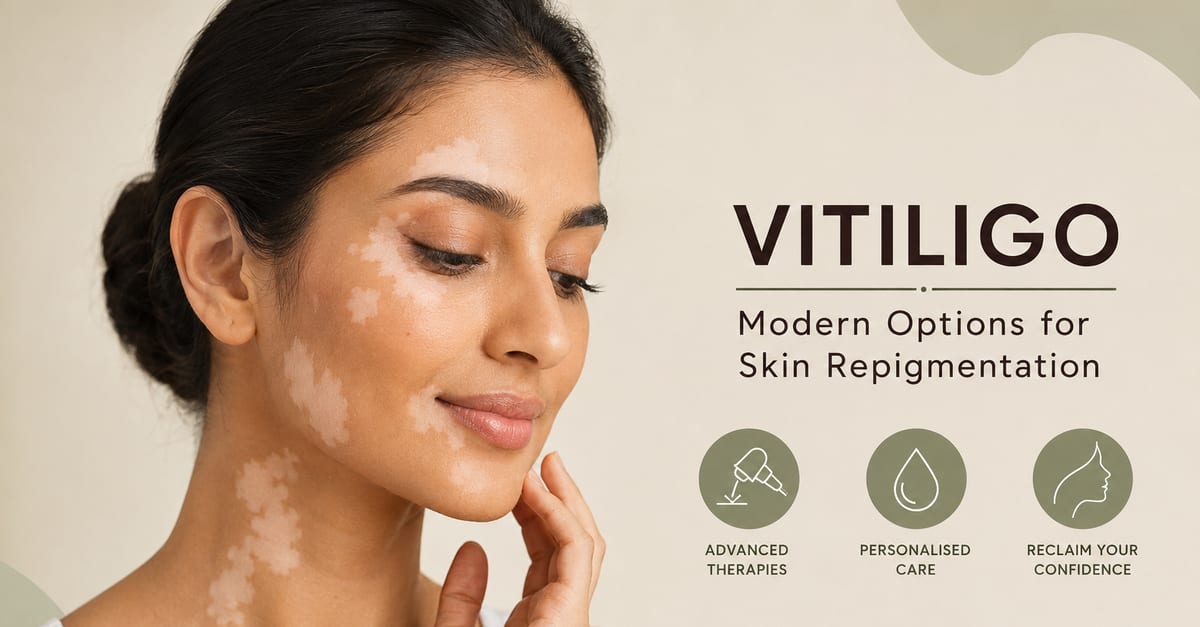
Vitiligo is a common skin condition that causes the loss of natural skin colour, resulting in white patches that can appear anywhere on the body. While vitiligo is not contagious, painful, or life-threatening, it can significantly affect a person’s confidence, self-esteem, and quality of life.
Advances in dermatology have transformed the management of vitiligo. Today, patients have access to a wide range of treatments that can help restore skin pigmentation, slow disease progression, and improve cosmetic appearance. From topical medications and phototherapy to advanced surgical procedures, modern treatment approaches offer hope to many individuals living with vitiligo.
At Derma Solutions Skin & Hair Clinic, we understand that every vitiligo case is unique. A personalized treatment plan based on the type, extent, and stability of vitiligo is essential for achieving the best possible results.
In this guide, I will explain what vitiligo is, why it occurs, and the latest treatment options available for skin repigmentation.
What Is Vitiligo and Why Does Skin Lose Its Natural Colour?
Vitiligo is an autoimmune skin disorder in which the body’s immune system mistakenly attacks melanocytes, the cells responsible for producing melanin.
Melanin is the pigment that gives colour to:
- Skin
- Hair
- Eyes
When melanocytes are damaged or destroyed, the affected skin loses its pigment and appears white.
Although the exact cause of vitiligo is not fully understood, several factors may contribute:
Autoimmune Factors
The immune system attacks pigment-producing cells.
Genetic Predisposition
Vitiligo can run in families, suggesting a genetic component.
Oxidative Stress
An imbalance between free radicals and antioxidants may damage melanocytes.
Emotional or Physical Stress
Stressful life events, skin injury, or illness may trigger vitiligo in susceptible individuals.
Vitiligo can affect people of all ages, genders, and skin types, although it is often more noticeable in individuals with darker skin tones.
What Are the Different Types of Vitiligo?
Vitiligo is classified based on the pattern and distribution of depigmented patches.
Non-Segmental Vitiligo
This is the most common type.
Characteristics include:
- Symmetrical white patches
- Often affects both sides of the body
- May involve hands, face, knees, elbows, and feet
- Can progress over time
Segmental Vitiligo
This form:
- Affects only one side of the body
- Often appears at a younger age
- Progresses rapidly initially
- Usually stabilizes after a period
Focal Vitiligo
A small number of isolated patches in one area.
Universal Vitiligo
A rare form where most of the body’s skin loses pigment.
Acrofacial Vitiligo
Primarily affects:
- Fingers
- Toes
- Around the mouth
- Around the eyes
Identifying the type of vitiligo helps determine the most appropriate treatment strategy.
Can Vitiligo Spread to Other Parts of the Body?
Yes. Vitiligo can spread, but the rate and extent vary from person to person.
Some patients experience:
- Slow progression over many years
- Periods of stability
- Rapid spread during active phases
Common factors associated with progression include:
- Autoimmune activity
- Emotional stress
- Skin injury or friction
- Delayed treatment
Not all vitiligo cases spread extensively. Some remain localized and stable for years.
Early diagnosis and treatment can help reduce disease activity and improve the chances of repigmentation.
What Are the Latest Treatment Options Available for Vitiligo?
Modern vitiligo treatment focuses on:
- Stopping disease progression
- Stimulating melanocyte activity
- Restoring pigmentation
- Improving cosmetic appearance
Current treatment options include:
Topical Medications
Used for localized vitiligo.
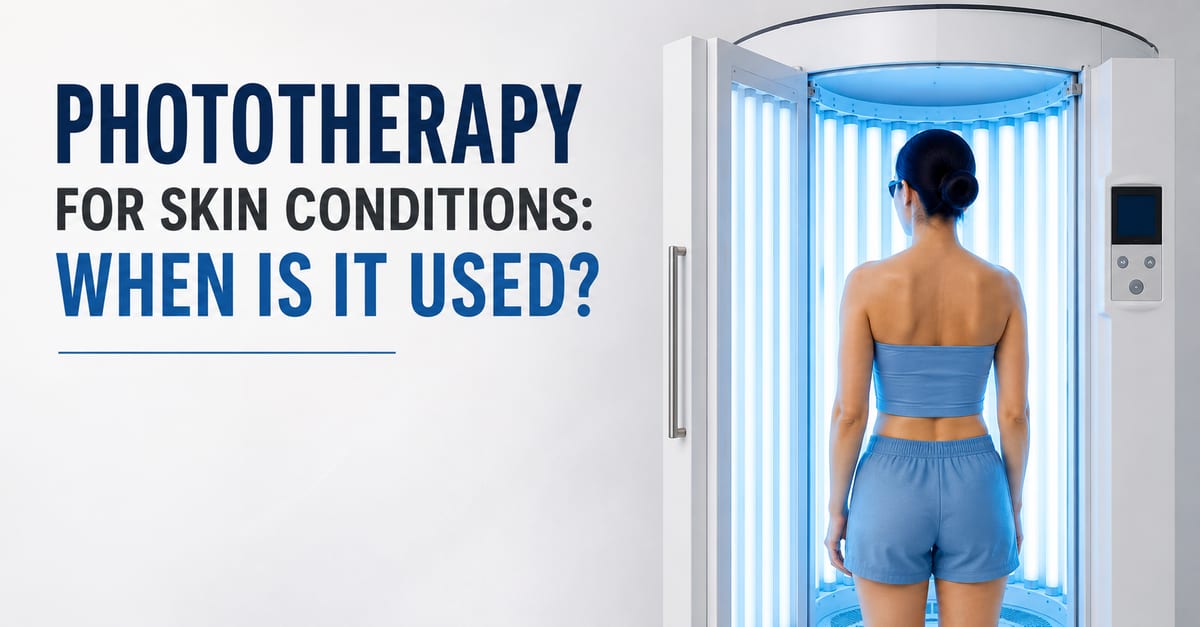
Phototherapy
One of the most effective non-surgical treatments.
Excimer Laser Therapy
Targets small vitiligo patches with focused ultraviolet light.
Oral Medications
May be used during active or rapidly spreading vitiligo.
Surgical Procedures
Recommended for stable vitiligo that does not respond to medical treatments.
Combination Therapies
Often provide superior outcomes compared to a single treatment approach.
Treatment selection depends on:
- Type of vitiligo
- Disease stability
- Location of patches
- Age of the patient
- Previous treatment response
How Does Phototherapy Help in Vitiligo Repigmentation?
Phototherapy remains one of the gold-standard treatments for vitiligo.
Narrowband UVB (NB-UVB) Therapy
This treatment exposes affected skin to a specific wavelength of ultraviolet light.
Benefits include:
- Stimulating melanocyte activity
- Encouraging melanin production
- Reducing autoimmune activity
- Promoting repigmentation
Phototherapy is particularly effective for:
- Face
- Neck
- Trunk
- Recent vitiligo patches
Excimer Laser
The excimer laser delivers targeted UVB light directly to affected areas.
Advantages include:
- Precision treatment
- Suitable for localized patches
- Faster response in selected cases
Patients typically require multiple sessions over several months for optimal results.
Can Topical Creams Restore Skin Colour in Vitiligo Patches?
Yes. Topical medications are often the first line of treatment for localized vitiligo.
Topical Corticosteroids
These medications:
- Reduce inflammation
- Suppress autoimmune activity
- Promote repigmentation
They are particularly useful during the early stages of vitiligo.
Calcineurin Inhibitors
These non-steroidal creams are commonly used on sensitive areas such as:
- Face
- Eyelids
- Neck
They help restore pigment while minimizing the side effects associated with long-term steroid use.
Advanced Topical Treatments
Newer targeted therapies continue to emerge and may offer improved outcomes in selected patients.
Topical treatments often work best when combined with phototherapy.
Is Surgical Treatment Like Skin Grafting Effective for Vitiligo?
Yes. Surgical treatment can be highly effective for carefully selected patients with stable vitiligo.
Vitiligo surgery is typically considered when:
- The disease has been stable for at least 6–12 months
- No new patches have appeared
- Medical treatments have failed to achieve satisfactory repigmentation
Skin Grafting
Healthy pigmented skin is transferred to depigmented areas.
Suction Blister Grafting
Pigmented skin cells are harvested using specialized blister techniques and transplanted.
Melanocyte Transfer Procedures
Melanocyte-rich cell suspensions are transferred to depigmented patches.
Benefits may include:
- Significant repigmentation
- Natural colour matching
- Long-lasting results
Surgical techniques are particularly effective for stable vitiligo affecting localized areas.
Who Is a Suitable Candidate for Vitiligo Surgery or Advanced Treatments?
The ideal candidate typically has:
Stable Vitiligo
No progression for at least 6–12 months.
Limited Disease
Localized patches often respond best to surgical approaches.
Poor Response to Medical Treatment
Patients who have not achieved satisfactory improvement with creams or phototherapy.
Realistic Expectations
Understanding that outcomes vary and multiple procedures may sometimes be required.
Patients with active or rapidly spreading vitiligo are generally advised to stabilize the condition before considering surgery.
A detailed dermatological evaluation helps determine the most suitable treatment approach.
How Long Does It Take to See Results After Vitiligo Treatment?
Vitiligo treatment requires patience because repigmentation occurs gradually.
Topical Treatments
Initial improvements may appear within:
- 2 to 4 months
Phototherapy
Visible repigmentation often begins after:
- 20 to 30 treatment sessions
- Approximately 2 to 4 months
Surgical Treatments
Pigment restoration may start within:
- 4 to 8 weeks
Continued improvement may occur for several months after the procedure.
Factors Affecting Results
- Disease duration
- Patch location
- Treatment type
- Patient age
- Skin type
- Treatment adherence
Facial vitiligo generally responds better than patches on hands and feet.
Can Vitiligo Come Back After Successful Treatment? How Can Recurrence Be Managed?
Yes. Even after successful repigmentation, vitiligo can recur.
Recurrence may occur due to:
- Autoimmune reactivation
- Stress
- Illness
- Discontinuation of maintenance therapy
Managing Recurrence
Dermatologists may recommend:
Maintenance Phototherapy
Periodic sessions help maintain pigment stability.
Topical Medications
Maintenance creams may reduce the risk of relapse.
Regular Follow-Up
Early detection of new lesions allows prompt intervention.
Healthy Lifestyle Measures
Patients may benefit from:
- Stress management
- Adequate sleep
- Balanced nutrition
- Protection from excessive sun exposure
Long-term monitoring helps maintain results and minimize recurrence.
Why Choose Derma Solutions for Vitiligo Treatment?
At Derma Solutions Skin & Hair Clinic, we provide evidence-based and personalized care for patients with vitiligo.
Our approach includes:
- Comprehensive skin evaluation
- Advanced diagnostic assessment
- Individualized treatment plans
- Narrowband UVB phototherapy
- Excimer laser therapy
- Medical management of active vitiligo
- Advanced surgical repigmentation procedures
- Long-term follow-up care
We focus not only on restoring pigmentation but also on helping patients regain confidence and improve their quality of life.
Final Thoughts
Vitiligo is a complex but manageable skin condition. Thanks to significant advances in dermatology, patients today have more treatment options than ever before.
Whether through topical medications, phototherapy, laser treatments, or surgical repigmentation procedures, many patients can achieve meaningful improvements in skin colour and appearance.
The key to successful treatment lies in early diagnosis, proper evaluation, and a customized treatment plan tailored to the individual’s needs.
If you or a loved one is living with vitiligo, consult an experienced dermatologist to explore the most suitable treatment options and begin the journey toward healthier, more confident skin.
Reference Sources
- American Academy of Dermatology (AAD)
Vitiligo overview, causes, diagnosis, and treatment approaches
https://www.aad.org/public/diseases/a-z/vitiligo-overview - National Health Service (NHS) – Vitiligo
Information on symptoms, causes, and treatment options
https://www.nhs.uk/conditions/vitiligo/ - Mayo Clinic – Vitiligo
Medical information on vitiligo, risk factors, and management
https://www.mayoclinic.org/diseases-conditions/vitiligo - National Institutes of Health (NIH) – Vitiligo Research
Research and clinical information on vitiligo
https://www.nih.gov/ - DermNet – Vitiligo
Dermatology reference for types and treatment options
https://dermnetnz.org/topics/vitiligo - Journal of the American Academy of Dermatology (JAAD)
Clinical research on vitiligo treatments and management
https://www.jaad.org/